
• Home
  • Academics
  • Student
  • Faculty
  • Community
  • Alumni
  • Opportunities

The Pipette Gazette

0 Comment

The Career Series: 6 Tips To Help You Communicate Research as News
20 Apr 2017

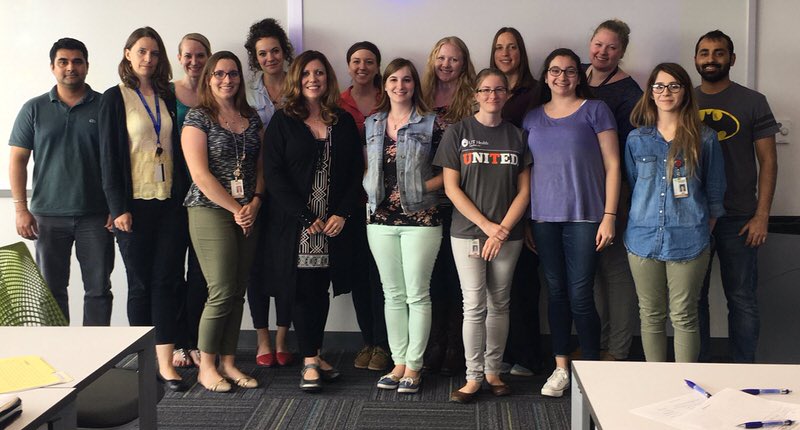
Career Advisory Council member and Bioscience Medical Reporter Wendy Rigby from Texas Public Radio gave students tips on how to better communicate their scientific research to the public. During the presentation, she played a few of the radio segments that she had worked on featuring researchers at UT Health San Antonio and Texas Public Radio.

New Equation: Silk + Stem Cells = Salivary Glands

What do silk and saliva have in common? They are both part of a unique experiment going on in San Antonio, a study that could change the lives of millions of people who suffer from dry mouth. Stem cells may help solve a common, painful problem.

SA Scientists Developing Animal Models For Zika Testing

San Antonio scientists are part of a push to develop laboratory animal models to study the Zika virus. Baboons and monkeys may be key to unlocking new treatments and vaccines. Marmosets are a New World monkey that lives in Brazil, where it’s been infected with Zika in the wild.

Here are some of her best tips.

1) Science is great. Plain English is better.

a. Take time to prepare your phraseology

b. Practice answers to questions you know you’ll be asked

c. Write down definitions of important words

2) Timing is everything.

a. Press conference announcements – 10 a.m. and 2 p.m. best times

b. Watch for news “hooks” in the headlines

c. Try not to release big science news on other “big” news days

3) Even journalism can be personal.

a.Press releases work, but human contact is more effective.

b.Don’t be annoying. Do establish relationships with integrity

c.Tailor what you send to who you send it to

4) Your expertise could be parlayed into freelance work.

a.The digital world is a beast with an endless appetite for content

b.Buff up your resume and send writing samples

c.Start your own blog.

5) What is interesting to you, you can make interesting to the public.

a. Don’t underestimate what lay people want to know

b. Think of new ways to make your work relevant

c. Publications can be a jumping off point

6) Consider the needs of the medium.

a. Newspapers generally need more content and quotes

b. Radio needs sound

c. TV need video and sound

d. Everyone has digital content so the ALL need photos

e. Make the data usable for all outlets

Social Share

  • google-share

Filter by categories

  • Academics
  • All Blogs
  • Alumni
  • Alumni News
  • Beyond The Bench
  • Career Development
  • Career Series
  • Community
  • Faculty
  • Faculty Spotlight
  • Final Words…
  • In Press
  • Incoming Student Spotlight
  • Meet The Researcher
  • Opportunities & Upcoming Events
  • Student
  • Student News
  • Words of Wisdom

Recent Posts

  • From Discovery to Diagnosis: How UT San Antonio Researchers Are Transforming Endometriosis Care
  • Esteban Castro Reflects on BIO International Conference and SMDP Scholar Journey
  • GSBS Students Showcase the Future of Biotech at Nucleate Texas Demo Day
  • Wasmuth named Howard Hughes Medical Institute Freeman Hrabowski Scholar
  • Candidacy Ceremony Means More Than a New White Coat