
Jordan Tanner: My Love For Anatomy
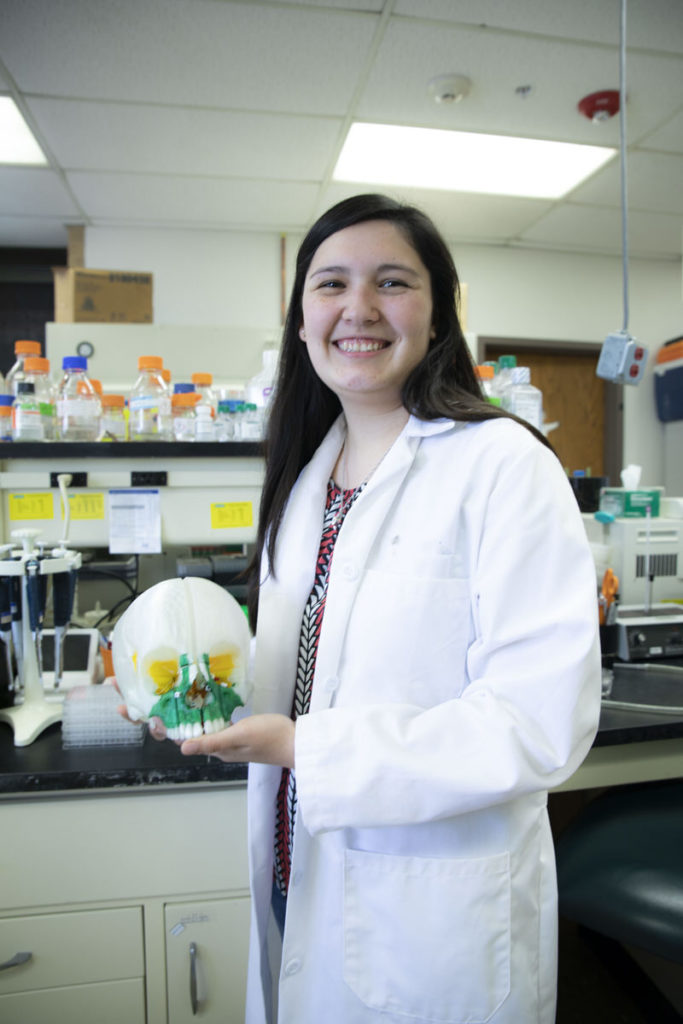 Jordan Tanner’s love for science first began because of her love of anatomy. In the 4thgrade, her class brought in sheep hearts for the students to dissect.
“I thought to myself this organ that I’m looking at has a function and a purpose. I realized I can take it piece by piece and each piece has a function.”
After this Tanner started to think about her own body and wanted to learn more about how human anatomy works.
At Health Careers High School in San Antonio, she had the opportunity to shadow doctors in the Neonatal Intensive Care Unit and Surgery Unit at University Hospital.
“I saw my first open heart surgery and I realized I wanted to do that,” she said. “I want to help my patients and share my love for anatomy with them.”
After high school, she enrolled in Austin College where she had the opportunity to work in a research lab of a mammologist whose research was on ground squirrels.
 “I helped to implant ibuttons which are discs that you can put into a mammal to record temperature and this specifically told us how hibernation affect food and weight intake,” she explained.
She found this research to be interesting because squirrels do not develop diabetes, heart disease, or any of the same problems that humans would have if we doubled our weight and then lost it all in the span of 5 months.
After graduating with a bachelor’s degree in Biology and History, she didn’t feel ready to jump into medical school so she was excited when her high school teacher told her about the M.S. in Cell Systems and Anatomy. She applied and was accepted.
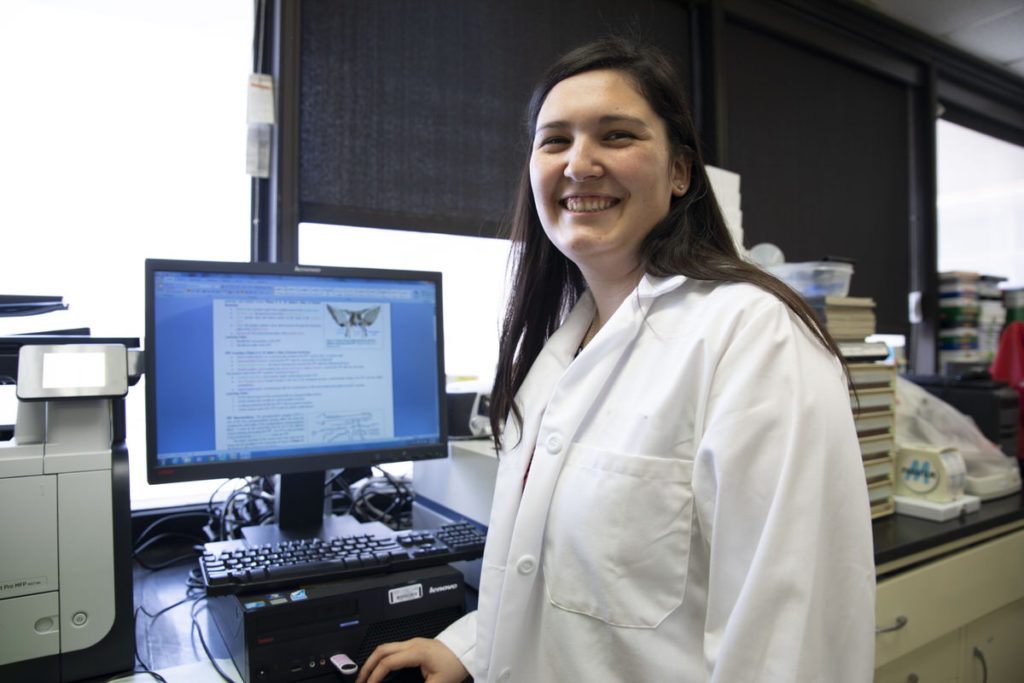
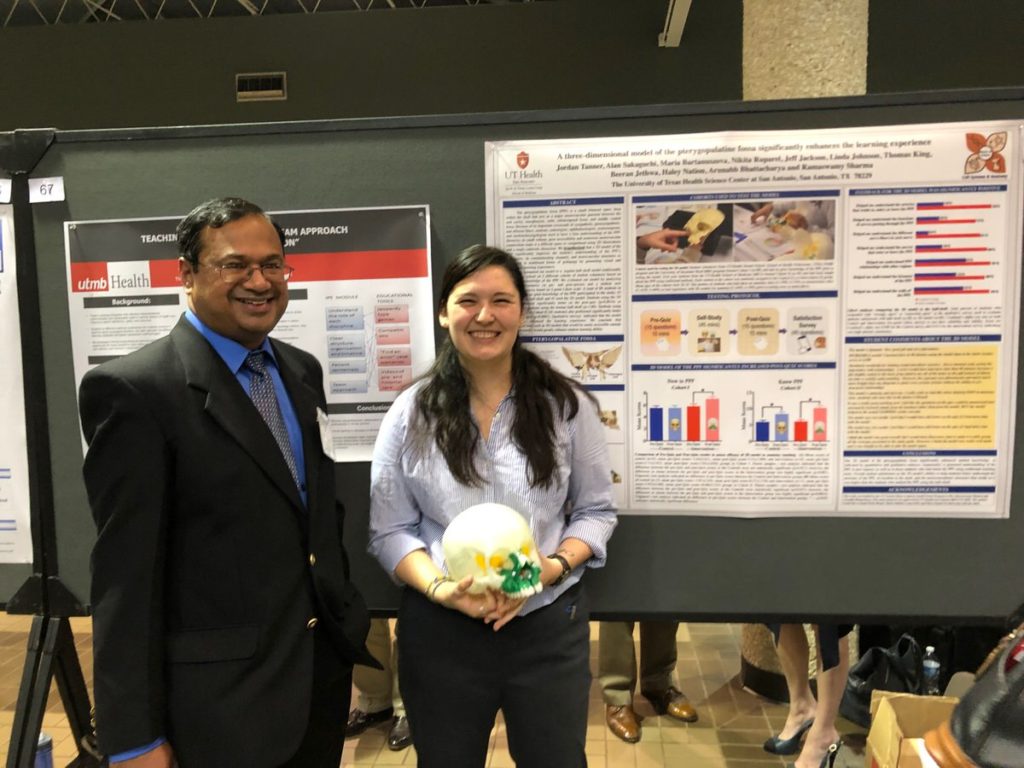
Now, she works in the lab of Dr. Ramaswamy Sharma where she has created a model of the pterygopalatine fossa.
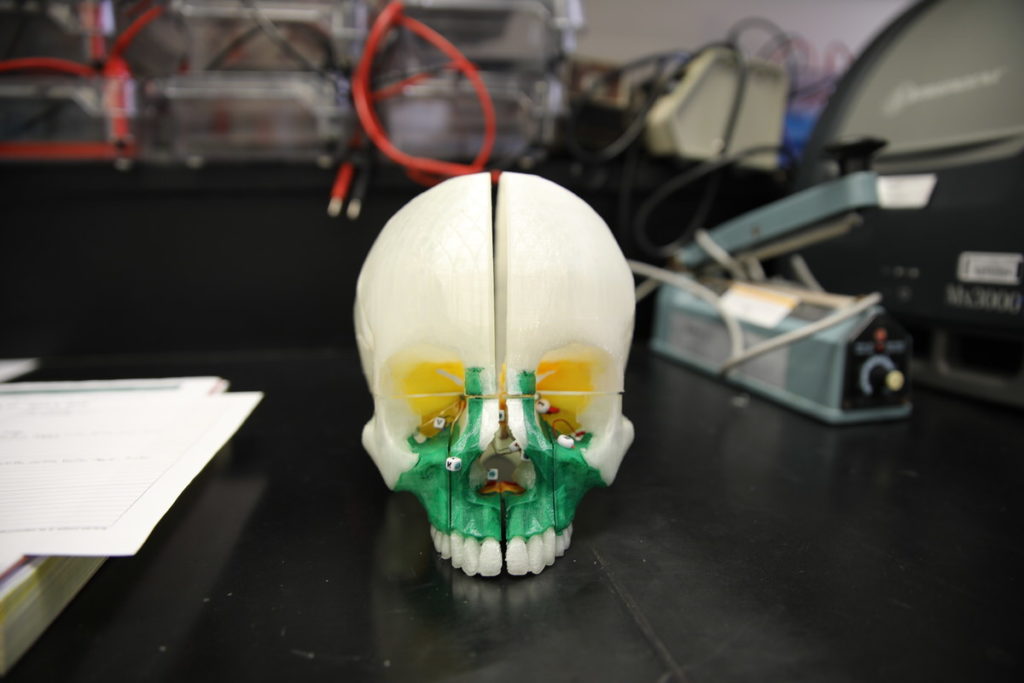
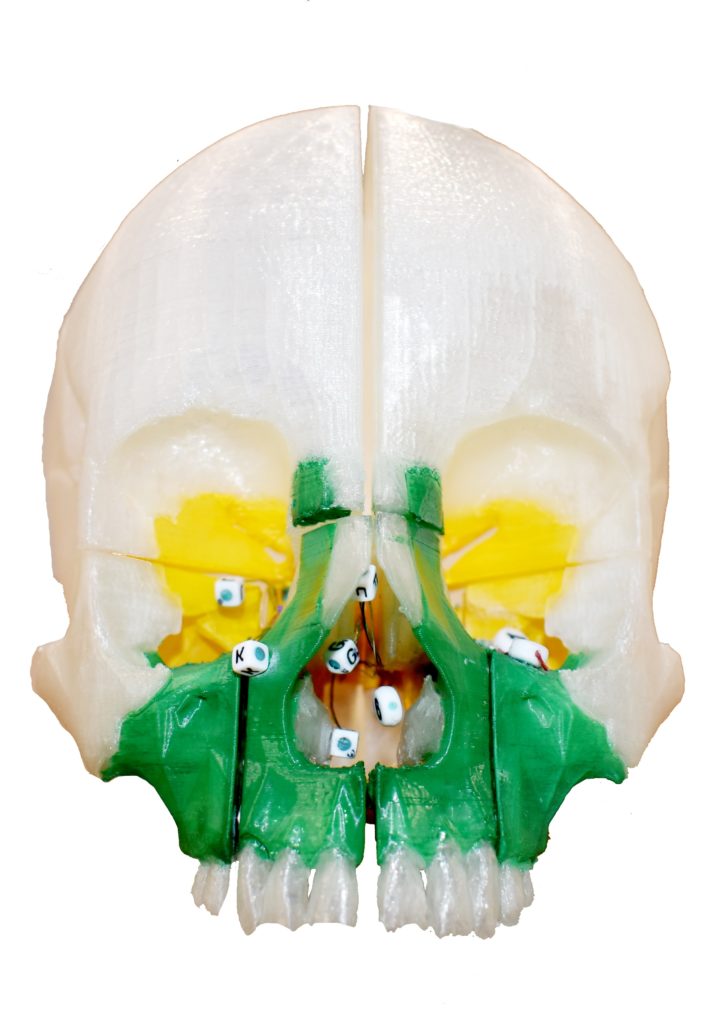
“The pterygopalatine fossa is a tiny space in our skull that acts as an important junction for nerves and arteries supplying various head regions. If the pterygopalatine fossa is affected, severe headaches called cluster headaches are felt that affect one side of the head, especially the area around the eyes. Therefore, knowledge of this area is critical for doctors, dentists, and ear, nose, throat specialists” she explained.
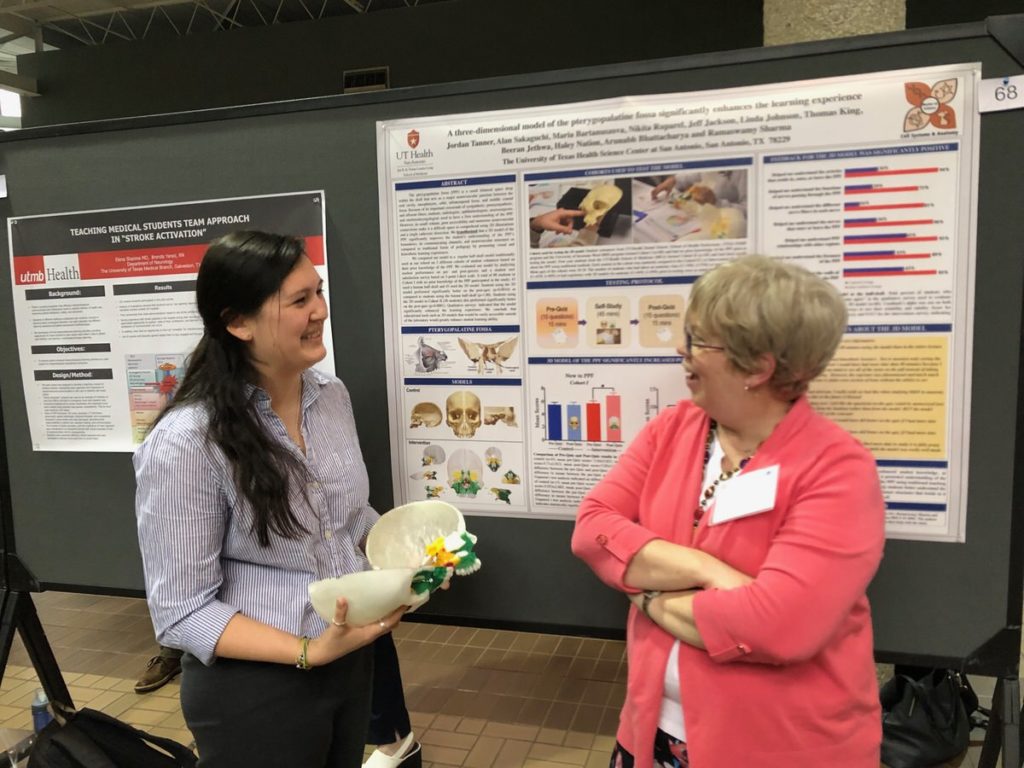
The model, which she will be presenting at Experimental Biology in April, includes the full skull which can be broken apart into two half skulls. The nerves and arteries are displayed as wires. There are also labeled beads so that students reading the accompanying manual can read more about the corresponding parts.
After graduation, Tanner will be applying to medical school and taking the MCAT.
Additional Photos
 This article was written by Charlotte Anthony, marketing specialist at the Graduate School of Biomedical Sciences at UT Health San Antonio. This article is part of the “Meet The Researcher” series which showcases researchers at the Graduate School of Biomedical Sciences at University of Texas Health Science Center San Antonio.


