T32 Feature: 2025-2026 Integrated Graduate Training Program in Neuroscience
Integrated Graduate Training Program in Neuroscience
Principle Investigator: Dr. David Morilak
Funding Source: National Institute of Neurological Disorders and Stroke
The GSBS would like to acknowledge and celebrate the students who were appointed to the Integrated Graduate Training Program In Neuroscience T32 Grant for the 2025-2026 Academic year. This achievement is a testament to their dedication, hard work, and commitment to neuroscience research.
The Integrated Graduate Program in Neuroscience at UT San Antonio – Health Science Center Campus provides training in many areas of expertise from molecular to behavioral neuroscience, in a biomedical research environment that fosters a unique exposure to clinical and translational neuroscience. This is an early-stage predoctoral training program that funds students in their second year of study. During that time, and continuing throughout their doctoral training, we provide a program of coursework, mentored laboratory research, and professional enrichment activities tailored to the individual interests and needs of our students, with a history of successful outcomes, with particular success training motivated and talented students from under-represented populations, and sustaining our program’s competitiveness on a national scale. Now entering its 13th year, the continued funding of this training grant will enhance the growth and development of our program moving forward, and amplify our ability to prepare our students for meaningful, impactful and gratifying careers as neuroscientists, ready to meet the most complex challenges and opportunities in our field.
2025-2026 Predoctoral Graduate Trainees
 Elizabeth Karpman
Mentor: Dr. David Morilak
Program: Integrated Biomedical Sciences – Neuroscience
Research Topic: I am conducting my dissertation research in Dr. Morilak’s lab, where I study the neural circuitry underlying stress-related psychiatric disorders, with a focus on PTSD. Using rat models of stress, I integrate behavioral and circuit-level approaches to investigate the mechanisms driving heightened startle responses characteristic of PTSD. I utilize the fear-potentiated startle paradigm and chronic unpredictable stress to model pathological startle reactivity, and I am studying the application of extinction, a model of exposure therapy used in the laboratory, as a potential therapeutic intervention. My goal is to identify novel approaches to reduce pathological startle reflexes and improve outcomes for individuals with PTSD.
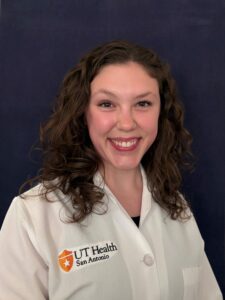
Megan Ouellette
Mentor: Dr. Daniel Lodge
Program: Integrated Biomedical Sciences – Neuroscience
Research Topic: My research focuses on understanding the neurobiological mechanisms underlying psychiatric disorders, including anxiety, depression, and PTSD. I am particularly interested in how these conditions alter brain structure and function, with the long-term goal of developing more precise and effective treatments. Currently, I study the therapeutic potential of psychedelic compounds as interventions for these disorders. Psychedelics have been shown to promote structural and functional plasticity across the brain, contributing to rapid and sustained symptom reduction. However, the mechanisms by which these compounds produce lasting changes remain unknown. My work aims to characterize the cellular- and circuit-level effects of psychedelic compounds in the brain, with the goal of optimizing these compounds for future clinical use.

Enrique Piedra
Mentor: Dr. Yi Zhu
Program: Integrated Biomedical Sciences – Neuroscience
Research Topic: My research interests center on the intricate interplay of immunoregulation, cognition, and neurodegeneration. Currently, I am focused on studying the kynurenine pathway and its impact on brain function and behavior.

Yaren Peña
Mentor: Dr. Yi Zhu
Program: Integrated Biomedical Sciences – Neuroscience
Research Topic: Investigating the role of senescent microglia in neuroinflammation and Alzheimer’s disease.
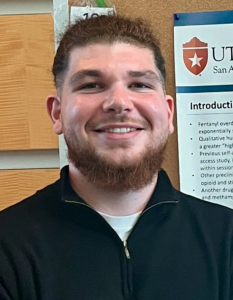 Simon Tangen
Co-Mentors: Dr. Gregory Collins and Dr. Lynette Daws
Program: Integrated Biomedical Science – Physiology and Pharmacology
Research Topic: Overdose deaths involving stimulants are at an all-time high, yet no FDA-approved medications for stimulant use disorder exist. Moreover, polysubstance use is the norm among individuals who misuse drugs. Despite this, relatively little is known about the factors driving co-use of opioids and stimulants. My research focuses on identifying and validating novel targets for stimulant use disorder while developing preclinical models to study opioid–stimulant co-use. His work examines the neurobiological mechanisms underlying the abuse-related effects of stimulants, as well as the factors that influence drug co-use. The overarching goal is to support the development of effective pharmacotherapies for stimulant use disorder and to better understand the determinants of opioid–stimulant co-use, ultimately aiming to integrate these approaches to evaluate potential medications and medication combinations in polysubstance use models.
2025-2026 Center for Biomedical Neuroscience Predoctoral Fellow in Neuroscience

Shamim Ahmed
Mentor: Dr. Hye Young Lee
Program: Integrated Biomedical Sciences – Neuroscience
Research Topic: My research focuses on defining how microglia—the brain’s resident immune cells—contribute to synaptic development in Fragile X Syndrome (FXS), the most common inherited form of intellectual disability, and a leading monogenic cause of autism. FXS results from the loss of the RNA-binding protein FMRP; however, how FMRP deficiency in specific brain cell types contributes to abnormal synaptic pruning and behavioral impairments remains poorly understood. Using microglia-specific conditional Fmr1 knockout mouse model, my work aims to define how the absence of microglial FMRP alters synaptic pruning, neuron–glia communication, and developmental circuit maturation. By integrating cellular and molecular approaches with developmental and behavioral analyses, this research seeks to advance our understanding of the glial contribution to FXS and to broaden current perspectives on how immune–neural interactions shape neurodevelopmental disorders.


