

Dr. Andrew Voorhees: Newest Graduate of the UTSA/UTHSCSA Biomedical Engineering Program

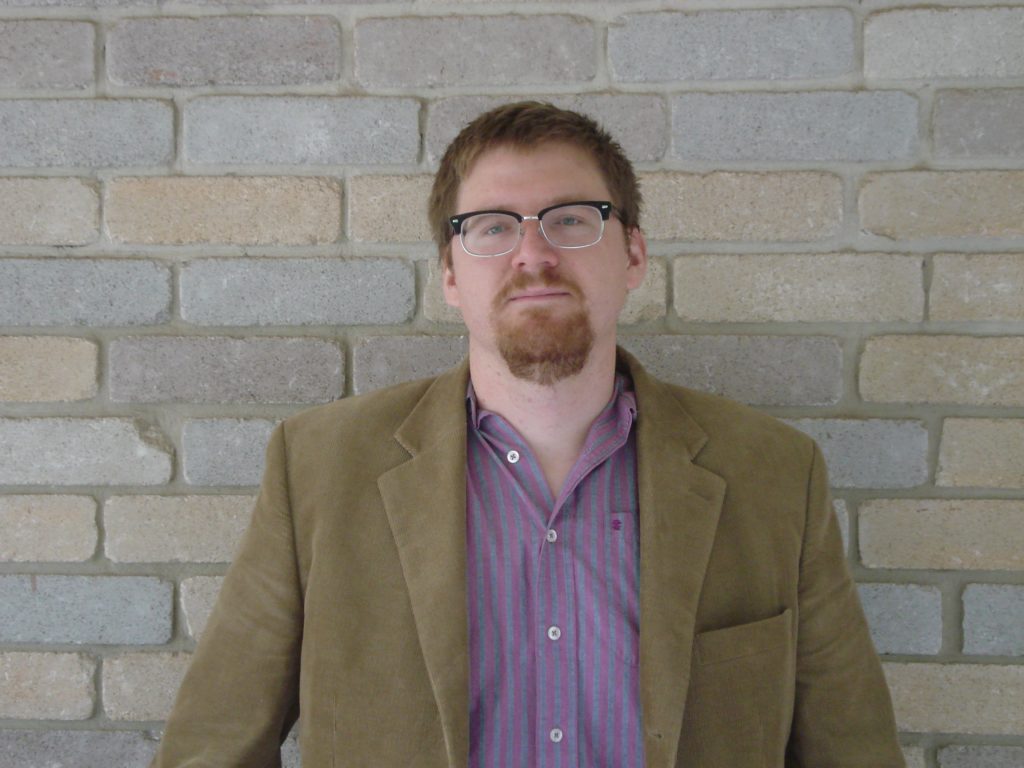 [PG] Tell us a little bit about yourself.
[Dr. Voorhees] I work with Dr. Hai-Chao Han as part of the UTSA Cardiovascular Biomechanics Lab and the San Antonio Cardiovascular Proteomics Center. My background is in both biology and mechanical engineering.
[PG] Please summarize your research for us.
[Dr. Voorhees] My research focuses on understanding the mechanical changes that occur in the left ventricle following myocardial infarction. Changes in the extracellular matrix alter the mechanical properties of the tissue and the function of the ventricle. My research combines both computational and experimental approaches.
[PG] What did you learn during your graduate student career?
[Dr. Voorhees] The most important skills I learned were in critical thinking and communication. My research project taught me to analyze biological and physiological problems using engineering concepts. As I progressed through my program, I developed the confidence to question some of the methods we employed and conclusions we were drawing. This outside perspective also meant that I needed to communicate my opinions to researchers with an entirely different background. This was a skill that was somewhat difficult to master at first but will certainly help in my future endeavors.
[PG] What’s next?
[Dr. Voorhees] In the short term, I am finishing up a few publications with Dr. Han. My longer term career goals are to find a position working on the research and development of cardiovascular devices, either in industry or as a post-doctoral researcher.
[PG] Any advice for your fellow graduate students?
[Dr. Voorhees] Master a skill or two that no one else has and use it to collaborate with other researchers. During my Ph.D. research, I only wrote two first authored research papers, but I am a co-author on six others. By collaborating with other labs, you can make new connections, learn new techniques, and publish papers without having to do as much work.


